
Which Banks Offer Tenancy by the Entirety?

Florida law presumes that a joint bank account owned by a married couple is held as a tenancy by the entirety. Tenancy by the entirety means the spouses together own 100% of the account.
Tenancy by the entirety ownership can protect the account from creditors of one spouse. However, some banks explicitly disclaim or do not offer entireties ownership in their signature cards or their account agreements, overriding the statutory presumption.
Below is a comparison of major banks (national and regional) and prominent Florida-based and national credit unions, summarizing whether they allow tenancy by the entirety for personal checking and savings accounts.
Major Banks – TBE Account Ownership Policies
The table below outlines each institution’s stance on tenancy by the entirety for joint personal accounts, based on their deposit account agreements or disclosures.
“Allowed” indicates the bank permits or recognizes TBE ownership (often by default, following Florida law).
“Not Allowed” means the bank’s contract expressly refuses or disclaims TBE ownership.
“Not Specified” indicates no explicit mention in the agreement (thus Florida’s default presumption of TBE would apply in the absence of a disclaimer).
| Institution | TBE Ownership Stance | Notes / Relevant Agreement Language |
|---|---|---|
| Bank of America | Allowed | No explicit TBE disclaimer in its standard account agreement. Florida law thus presumes a joint account held by spouses is TBE. There is a choice on the signature card to elect tenancy by entireties ownership. |
| Chase (JPMorgan Chase) | Allowed (Explicit) | Explicitly acknowledges TBE for Florida joint accounts. The Chase deposit agreement states that a Florida joint account owned by spouses “is a ‘tenants by the entirety’ account unless the signature card indicates otherwise.” Chase thus recognizes TBE by default in Florida. |
| Wells Fargo | Not Specified (Presumed Allowed) | The Wells Fargo agreement does not expressly reject TBE. It treats joint accounts as joint tenants with survivorship “unless applicable state laws require other treatment.” In Florida, that means the default TBE presumption stands. |
| Citibank | Not Specified (Presumed Allowed) | No known language in Citi’s client manual disclaiming TBE. Joint accounts are generally “joint tenancy” by default, and Citi does not explicitly opt out of Florida’s TBE rule. Therefore, a joint spousal account is presumed TBE absent any contrary written designation. |
| Truist (SunTrust/BB&T) | Not Allowed (Explicit) | Expressly rejects TBE in its terms. Truist’s deposit agreement stipulates that any joint account is held as joint tenants with right of survivorship, “and not as ‘tenants by the entirety.’” The contract even says customers cannot change the ownership to TBE without the bank’s approval. This policy inherited the stance of SunTrust/BB&T (now merged into Truist). |
| PNC Bank | Not Allowed (Explicit) | Expressly disclaims TBE in Florida. PNC’s customer agreement for personal accounts says for Florida accounts in spouses’ names, the account is “NOT owned as tenants by the entireties unless otherwise expressly designated,” and PNC “reserves the right to refuse to allow” a TBE designation at its discretion. |
| Regions Bank | Not Allowed by Default (Allowed only if explicitly designated) | Regions’ deposit agreement defaults to joint with survivorship, not TBE, for Florida couples, “unless otherwise expressly designated on the signature card or other account records.” In other words, Regions will treat an account as TBE only if the spouses and bank explicitly set it up as such. If no TBE designation is made, the account is not treated as entireties. |
| Fifth Third Bank | Not Allowed (Explicit) | Expressly opts out of TBE. Fifth Third’s account agreement states that a joint account “shall be deemed as owned as joint tenants with right of survivorship and not as tenancy by the entireties.” This contractual language means Fifth Third does not permit TBE ownership on their accounts. |
| TD Bank | Not Specified (Presumed Allowed) | TD Bank’s consumer account terms do not appear to specifically mention or renounce TBE for Florida accounts. No TBE disclaimer is known, so a joint account opened by spouses in Florida should fall under the statutory presumption of TBE ownership. |
Speak With a Florida Asset Protection Attorney
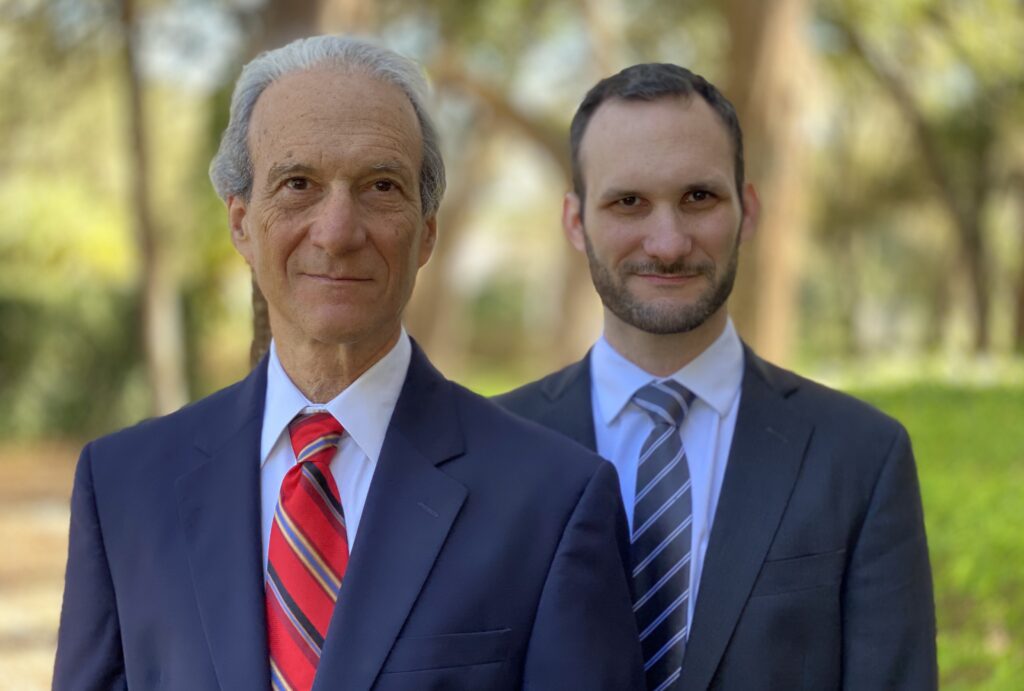
For more than three decades, Jon Alper and Gideon Alper have designed and implemented legal structures for clients facing lawsuits, creditor exposure, and collection risk.
Consultations are confidential and conducted remotely by phone or Zoom.
Book a ConsultationFlorida-Based Credit Unions – TBE Policies
Most Florida-based credit unions do not disclaim TBE in their account agreements, which means they adhere to Florida’s default rule that a joint account held by a married couple is a tenancy by the entirety.
None of the major Florida credit unions explicitly reject TBE ownership in their personal account terms. Below are several prominent credit unions in Florida and their stance:
| Credit Union | TBE Ownership Stance | Notes |
|---|---|---|
| Suncoast Credit Union (Tampa-based, Florida’s largest CU) | Not Specified (Default) | No TBE restrictions. Suncoast’s Membership and Account Agreement does not include any clause disclaiming tenancy by the entirety. Joint accounts generally include rights of survivorship by default, which comports with TBE ownership. |
| VyStar Credit Union (Jacksonville-based) | Not Specified (Default) | No disclaimer of TBE. VyStar’s joint accounts are issued with rights of survivorship, and there is no explicit prohibition on entireties titling. |
| Space Coast Credit Union (Melbourne-based) | Not Specified (Default) | TBE presumed. No account agreement language rejecting TBE. Accounts opened by spouses are subject to the Florida law presumption of tenancy by the entirety unless the couple specifies otherwise in writing. |
| MIDFLORIDA Credit Union (Lakeland-based) | Not Specified (Default) | No TBE limitations. MIDFLORIDA’s personal account disclosures do not override the default Florida rule. Married joint owners are presumed to hold accounts as tenants by the entirety absent an explicit different designation. |
| GTE Financial Credit Union (Tampa) | Not Specified (Default) | No explicit prohibition. GTE Financial’s account agreements do not mention tenants by entirety, so joint accounts in the names of husband and wife are protected as entireties property by default under Florida law. |
| Fairwinds Credit Union (Orlando) | Not Specified (Default) | Fairwinds does not require any special action to hold accounts as TBE. With no contractual disclaimer, a spousal joint account enjoys TBE status by default. |
Other Credit Unions – TBE Policies
Here is a list of other, non-Florida credit unions and their policies for tenancy by the entirety accounts.
| Credit Union | TBE Ownership Stance | Notes |
|---|---|---|
| Navy Federal Credit Union | Not Specified (Presumed allowed) | Account disclosures define joint ownership and survivorship, but do not mention EBE. Under Florida law, this is TBE by default. |
| PenFed Credit Union | Not Specified (Presumed allowed) | No mention of TBE ownership in the account agreement or signature card. Will be TBE by default in Florida. |
| USAA (USAA Federal Savings Bank) | Not Specified (Presumed allowed) | The current USAA account agreement does not expressly disclaim TBE ownership. However, a prior version of the account agreement did expressly disclaim tenancy by entireties. If the account was created at the time the prior agreement was in effect, the account may not be TBE even though the agreement later changed. |

About the Author
Gideon Alper is a nationally recognized asset protection attorney who focuses his practice on offshore trust planning, including Cook Islands trusts and LLC structures. He previously served as an attorney with the IRS Office of Chief Counsel, giving him a unique perspective on cross-border planning issues.
A graduate of Emory University Law School (with Honors), Gideon brings more than fifteen years of experience to advising clients with significant litigation exposure. He is known for helping business owners, professionals, and families implement legal structures that are efficient, resilient, and built for serious litigation risk.
Sign up for the latest information.
Get regular updates from our blog, where we discuss asset protection techniques and answer common questions.